




Have you ever felt like traditional banking just isn’t keeping up with the times? Well, millions of people around the world are thinking the same thing!
And if you are looking for an alternative, a DeFi wallet could be something you have been looking for. It gives people the power to control their own money without relying on banks or middlemen.
In fact, by 2025, there will be over 198 million active wallets in DeFi globally, which makes up around 24% of all crypto wallets. That’s a clear sign that more and more users are moving toward decentralized finance to take charge of their financial future.
But what exactly is a DeFi wallet? And why are so many crypto users switching to it? Let’s get answers to all your questions in this blog today!
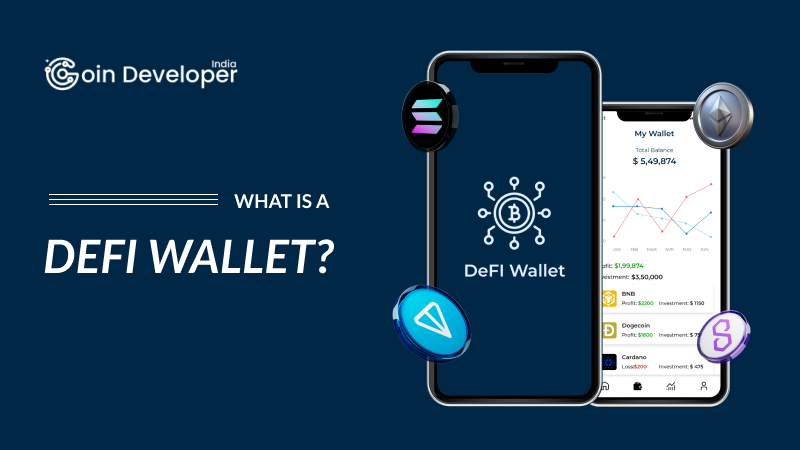
What is a DeFi Wallet?
Before we understand what a DeFi wallet is, let’s know what DeFi basically is!
DeFi stands for Decentralized Finance. It typically means financial systems that run on blockchain technology, which allow buyers and sellers to execute transactions without third parties or intermediaries.
Now, coming to a DeFi (decentralized finance) wallet, it is a type of crypto wallet that is the key to interaction with these decentralized services. It is a non-custodial crypto wallet that allows users to retain complete control of their private keys, unlike in centralized crypto exchange platforms, where the user gives control to a third party. In simpler terms, a DeFi wallet ensures users have full ownership of their digital assets.
A recent article in The Times of India reveals that crypto thefts have surged past a staggering $2.17 billion in just the first half of 2025. Much of this is tied to centralized platforms, which greatly benefit self-custody in DeFi wallets.
How DeFi Wallets Work?
Here’s how DeFi wallets function in simpler terms:
- Wallet Creation: When you set up a DeFi wallet, you are given a seed phrase, which generates your private key and public address. The private key must be stored securely, as it controls access to your assets.
- Sending & Receiving Tokens: To receive tokens, share your public address. To send tokens, you approve the transaction by signing it with your private key.
- dApp Interaction: DeFi wallets connect seamlessly with decentralized applications (dApps), enabling activities like token swaps, borrowing, lending, staking, and more.
- Smart Contract Access: Some wallets allow users to interact with or deploy smart contracts, which enables more advanced DeFi functionalities.
Types of DeFi Wallets
Before choosing a DeFi wallet, it is important to understand the two categories they fall into: hot and cold wallets. Let’s understand them briefly!
Hot Wallets
Hot wallets are connected to the internet, which makes them perfect for day-to-day transactions and interacting with DeFi protocols. They are easy to use but more vulnerable to hacks and phishing if not properly secured.
Some of their types include:
- Browser-Based Wallets: These are browser extensions that let you interact directly with DeFi apps. Examples: MetaMask, Rabby, Coinbase Wallet (web version)
- Mobile Wallets: These allow you to manage your crypto on the go. Examples: Trust Wallet, Rainbow, Argent
- Desktop Wallets: These are the apps that you install on your computer, which offer more control. Examples: Exodus, Atomic Wallet
Cold Wallets
Cold wallets are offline wallets. They don’t connect to the internet, which makes them far more secure for storing large amounts of crypto. But these are less convenient for frequent use.
- Hardware Wallets: These are physical devices that store your private keys offline. Examples: Ledger, Trezor
- Paper Wallets: These are basically printed or written records of your private and public keys.
What are the Features of a DeFi Wallet?
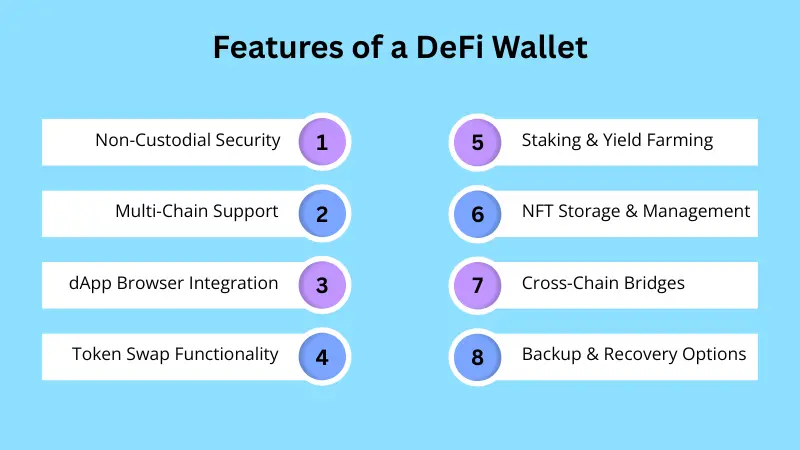
DeFi wallets offer a wide range of features that you can even consider adding while developing your own DeFi wallet. This makes them a perfect solution for managing digital assets, such as:
Non-Custodial Security
A DeFi wallet is known for its security. These are non-custodial, which means you have complete control over your assets. Unlike centralized platforms, no third party holds your private keys or funds. This reduces the risk of hacks or platform failure.
Multi-Chain Support
Most of the best DeFi wallets support multiple blockchain networks such as Ethereum, BNB Chain, Polygon, and Solana. This is one of the DeFi wallet features that allows users to manage, send, and receive tokens across various ecosystems within a single wallet.
dApp Browser Integration
A built-in dApp browser lets users interact directly with decentralized applications like Uniswap, Aave, or OpenSea from within the wallet. This means you can trade, lend, stake, or buy NFTs. It offers a seamless DeFi experience directly connected to your wallet’s assets.
Token Swap Functionality
DeFi wallet apps often include a native token swap feature, which allows users to exchange one cryptocurrency for another directly within the app. These swaps are powered by decentralized exchanges (DEXs) and offer real-time price data.
Staking & Yield Farming
Many DeFi wallets provide direct access to staking and yield farming protocols. Users can lock their tokens in supported pools to earn passive income or rewards.
NFT Storage & Management
DeFi wallets often support NFT standards like ERC-721 and ERC-1155. This lets users securely store, view, and transfer digital collectibles and in-game assets. This even makes it easier to manage your NFT collection from one place.
Cross-Chain Bridges
Cross-chain bridge functionality allows users to move assets between different blockchain networks directly from the wallet. For example, you can transfer tokens from Ethereum to Polygon without using a centralized exchange.
Backup & Recovery Options
DeFi wallets offer backup and recovery options through seed phrases, which must be securely stored. Some also support the integration of hardware wallets for enhanced protection. If your device is lost or stolen, the seed phrase allows you to recover your wallet.
Advantages of Using a DeFi Wallet
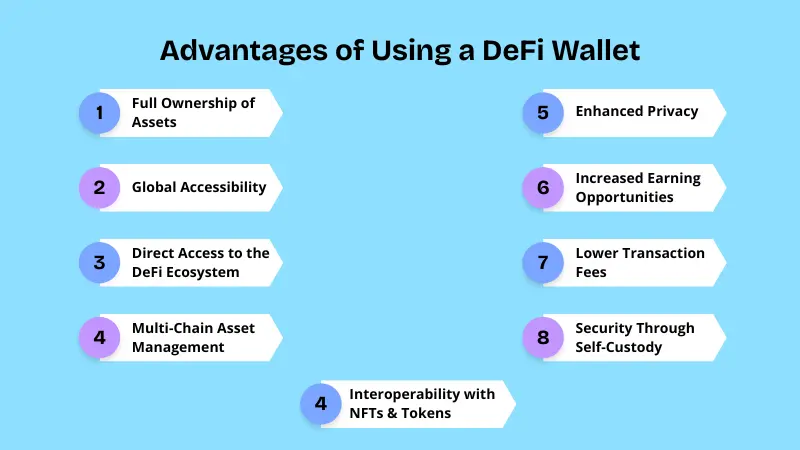
Now, let’s talk about the various DeFi wallet benefits these offer!
Full Ownership of Assets
Most top DeFi wallets in 2025 give you complete control of your crypto by letting you manage your own private keys. Unlike centralized exchanges, no third party holds custody of your assets. This means no one can freeze, access, or restrict your funds.
Global Accessibility
A DeFi wallet can be used from anywhere in the world, as long as you have internet access. There are no regional restrictions, banking limitations, or account blocks.
Direct Access to the DeFi Ecosystem
DeFi wallets connect you directly to decentralized applications (dApps). This enables you to lend, borrow, trade, or stake assets without needing permission or intermediaries. This allows for faster and more efficient transactions, all from within your wallet interface.
Multi-Chain Asset Management
Modern DeFi wallets support multiple blockchain networks, such as Ethereum, BNB Chain, Polygon, and Solana. This allows users to manage a wide variety of tokens and assets in one place.
Enhanced Privacy
Most DeFi wallets do not require KYC (Know Your Customer) procedures or personal information to use. Your identity is tied only to your wallet address. This makes DeFi wallets perfect for users who value anonymity while still participating in financial activities.
Increased Earning Opportunities
DeFi wallets provide access to yield-generating activities like staking, liquidity provision, and yield farming. These features allow users to earn passive income directly from their crypto holdings.
Lower Transaction Fees
By interacting directly with decentralized protocols, DeFi wallets help users avoid many of the hidden or extra fees often charged by centralized platforms. There are no deposit or withdrawal fees, and smart contract-based operations can be more cost-efficient.
Security Through Self-Custody
Because users hold their private keys, DeFi wallets eliminate the risks associated with centralized hacks or platform failures. Funds are stored directly on the blockchain and not in a centralized server.
Interoperability with NFTs & Tokens
DeFi wallets support a variety of digital assets, which allows users to store, view, send, and trade both tokens and NFTs from the same interface. It simplifies asset management and supports participation in Web3 gaming, collectibles, and metaverse platforms.
Use Cases of DeFi Wallets in 2025
DeFi wallets are a versatile tool for engaging in several activities within the decentralized finance space. Here are some of the most common DeFi wallet use cases:
Multi-Chain / Cross-Chain Interactions
DeFi wallets now support multiple blockchains, which allows users to hold and transfer assets across ecosystems. This flexibility gives users access to broader investment opportunities and dApps without being locked into one network. It enhances usability, liquidity, and freedom in decentralized finance.
Staking, Yield Farming & Passive Income
Users can stake their crypto or provide liquidity directly from their wallet to earn interest or rewards. DeFi wallets simplify access to staking protocols, which makes it easier for users to grow assets passively.
DEX & Token Swaps
DeFi wallets integrate with DEXs, which allows users to swap tokens instantly without leaving the wallet. This improves privacy, reduces risks, and gives access to a wide range of tokens. It enables fast, secure, peer-to-peer trading.
Lending & Borrowing
Users can lend or borrow their crypto to earn interest assets through their DeFi wallet. This unlocks liquidity without selling holdings and offers an alternative to traditional credit systems.
Decentralized Identity & Privacy
DeFi wallets store decentralized identities (DIDs), which enable secure login, verifiable credentials, and anonymous transactions. This boosts privacy, usability, and trust, which makes wallets safer while keeping control in the hands of the user.
DeFi Insurance & Risk Management
Some wallets now offer access to DeFi insurance protocols that protect users from losses due to hacks or bugs. They also help assess risks of dApps and smart contracts. This builds confidence among users, especially those new to DeFi.
Asset Tokenization
DeFi wallets now support real estate tokenization and other real-world assets like art or stocks, which allows users to invest in fractional ownership. These tokens can be traded, staked, or used as collateral.
Governance & DAO Participation
Holding governance tokens in a DeFi wallet allows users to vote on proposals, funding decisions, and upgrades in DAOs (decentralized autonomous organizations). DeFi wallets simplify this process and help users shape the future of the protocols they support.
Wrapping Up
That’s a wrap for this blog!
By now, you might have understood that DeFi blockchain wallets are a promising investment. They are a non-negotiable part of the DeFi space, and the earlier you step in, the easier it will be for you to attract newbies.
However, with a wide range of perks come responsibilities. Remember to always prioritize the security of your wallet and stay informed in the DeFi ecosystem.
On the other hand, if you need assistance regarding your DeFi wallet, Technoloader can be your go-to partner. With years of experience in the field, we help startups and enterprises bring their decentralized visions to life.
Without further delay, get in touch with us!