







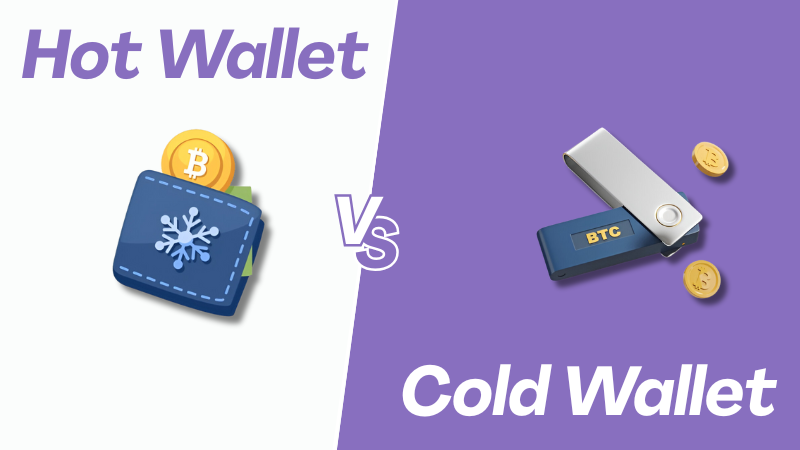
So, you have finally decided to step into the crypto world – welcome!
But just as you get the hang of things, you run into this question: “Where should I store my crypto?” That’s when you hear about crypto wallets!
Again, when we talk about them, you need to make a selection about hot wallets and cold wallets. Is it getting confusing? Don’t worry, we’ve got you covered!
In this blog, we’ll talk about what hot and cold wallets are, how they work, and most importantly, which one might be better for you. Understanding the difference can help you protect your digital assets with confidence.
Let’s keep it simple, practical, and easy to understand. Ready? Let’s start!
What is a Hot Wallet?
A hot wallet in crypto, also known as a software wallet, is basically a digital wallet that is connected to the internet. It is installed on devices like smartphones or laptops. The defining feature of a hot wallet is that it generates a seed phrase and stores your private keys online.
However, the online nature of a hot wallet presents a security concern for users. Once your seed phrase or private keys are generated online, there’s no way of keeping them secret. Despite this challenge, it is commonly used by newbies due to its ease of use and seamless accessibility.
How Does a Hot Wallet Work?
Here’s a step-by-step explanation of how hot wallets work:
It Has Two Important Keys
- Public Keys: This is like your email address. You can share it with others to receive crypto.
- Private Keys: This is like your password. You must keep it secret because it lets you access and spend your crypto.
Always Online
- A hot wallet is always connected to the internet. This means you can:
- Quickly send and receive crypto
- Access your funds from your phone, computer, or web browser
Sending & Receiving Crypto
To receive crypto:
- Share your wallet address
- Someone sends crypto to that address
- You will see the funds appear in your wallet
To send crypto:
- You type in the other person’s wallet address
- The wallet uses your private key to approve the transaction
- The transaction is then sent to the blockchain
Pros & Cons of Hot Crypto Wallets
Pros:
- High Convenience: Always connected to the internet for quick access.
- Easy to Use: User-friendly interfaces are ideal for beginners.
- Fast Transactions: Send and receive crypto instantly.
- Accessible on Multiple Devices: Can be used on phones, desktops, or browsers.
Cons:
- Vulnerable to Hacks: Constant internet connection exposes them to cyberattacks.
- Less Secure for Large Holdings: Not ideal for storing large amounts of crypto.
- Requires Internet Access: Not usable offline in emergency situations.
What is a Cold Wallet?
A cold wallet is another type that is not connected to the internet. It is often a physical device that stores your private keys offline. This offline storage makes cold wallets less susceptible to online attacks, which provides a higher level of security for your cryptocurrencies.
However, the offline nature of cold wallets makes them less convenient for regular transactions. If you wish to use your cryptocurrencies that are stored in a cold wallet, you need to connect it to a device, transfer the necessary amount to a hot wallet, and then conduct the transaction.
How Does a Cold Wallet Work?
Let’s break it down in easy steps:
It Also Uses Public and Private Keys
Just like a hot wallet, a cold wallet has:
- Public Key: You can share this to receive crypto.
- Private Key: This lets you access and spend your crypto. It must stay secret and safe.
Works Without the Internet
- Cold wallets are offline wallets. This means:
- They are not connected to the internet most of the time
- This keeps your private key safe from hackers or viruses
Sending Crypto from a Cold Wallet
- You plug in your hardware wallet
- You sign the transaction
- The signed transaction is then sent to the blockchain via a device
Pros & Cons of Cold Crypto Wallets
Pros:
- High Security: Not connected to the internet, which makes them immune to online hacking.
- Offline Storage: Keeps private keys completely offline.
- Best for Long-Term Storage: Ideal for holding large amounts of crypto securely.
- Immune to Malware & Phishing: Not affected by most forms of digital attacks.
Cons:
- Less Convenient: Must be manually connected to a device for transactions.
- Risk of Loss: If lost or damaged without a backup, funds may be unrecoverable.
- Slower Transactions: Requires extra steps for sending crypto.
Hot Wallet and Cold Wallet: Key Differences
Now, let’s have a look at the difference between a hot wallet and a cold wallet in cryptocurrency that will help you understand them better!
| Feature | Hot Wallet | Cold Wallet |
| Internet Connection | A hot wallet is always connected to the internet. | A cold wallet remains offline and does not connect to the internet. |
| Security | Hot wallets are more vulnerable to cyber threats like hacking or phishing. | Cold wallets offer higher security by keeping private keys offline. |
| Convenience | Hot wallets are very convenient and easy to use for daily transactions. | Cold wallets are less convenient, requiring extra steps to access and use. |
| Accessibility | Hot wallets can be accessed via smartphones, computers, or web browsers. | Cold wallets require physical access to the device, such as a USB stick. |
| Best Use Case | They are best suited for frequent trading and everyday crypto transactions. | They are ideal for long-term storage and holding large amounts of cryptocurrency. |
| Risk of Physical Theft | Hot wallets are digital and are less likely to be physically stolen. | Cold wallets can be physically stolen if not stored securely. |
| Risk of Cyber Attack | Hot wallets have a high risk of being targeted by hackers and malware. | Cold wallets have a very low risk of cyber attack due to being offline. |
| Examples | MetaMask, Trust Wallet, and Coinbase Wallet. | Ledger, Trezor, and paper wallets. |
Which One Should You Choose: Hot Wallet or Cold Wallet?
Still confused about which type of crypto wallet you should go ahead with? Here are some tips that you must consider:
Think About How Often You Use Crypto
If you use crypto daily, that is for trading, buying, or transferring, it makes sense to choose a hot wallet. It is fast, always online, and easy to access. But, if you hold your crypto as a long-term investment, a cold wallet is a safer option because it keeps your assets offline and away from hackers.
Consider How Much Crypto You Have
A hot wallet would be a better option if you are holding a small amount. But if you have a large amount or plan to hold for years, you will want the extra security that a cold wallet offers. It is like keeping your savings in a safe place instead of in your pocket.
Know Your Risk & Comfort Level
If the idea of someone hacking your wallet makes you nervous, you must go for a cold wallet. That’s because it is offline; thus, it is much harder to hack. However, if you are fine with taking some risk for the sake of speed and convenience, a hot wallet might be the perfect option.
Balance Security & Convenience
Hot wallets are a perfect option if you want quick access on your phone or computer. But they are more vulnerable to cyber threats. Cold wallets are much safer but less convenient, as you have to physically connect them to make a transaction. Thus, choose based on what matters most to you.
Think About Your Tech Skills
Hot wallets are simple to use, which makes them perfect for newbies. But cold wallets need a bit more setup and responsibility, like securely storing your recovery phrase. If you are tech-savvy or willing to learn, a cold wallet isn’t hard to manage.
Plan to Use DeFi or NFTs
If you want to use decentralized apps, swap tokens, or collect NFTs, you will need a hot wallet that directly connects to those platforms. Cold wallets are great for storing assets, but not for actively using them online.
The End Note
That brings us to the end of this blog!
Well, choosing between hot and cold wallets ultimately depends on your individual needs, risk tolerance, and convenience.
We hope that the tips mentioned above helped you choose one.
But you may even use a combination of both wallet types, like using hot wallets for small yet frequent transactions and cold wallets for secure yet long-term storage of cryptocurrencies. This provides the best balance of convenience and security.
So, ready to take the next step? Reach out to the experts at Coin Developer India to help you get started building your crypto wallet, whether it’s a hot or cold wallet!